Herbal Introduction: Bee Balm
(the herb everyone should have in their garden…)
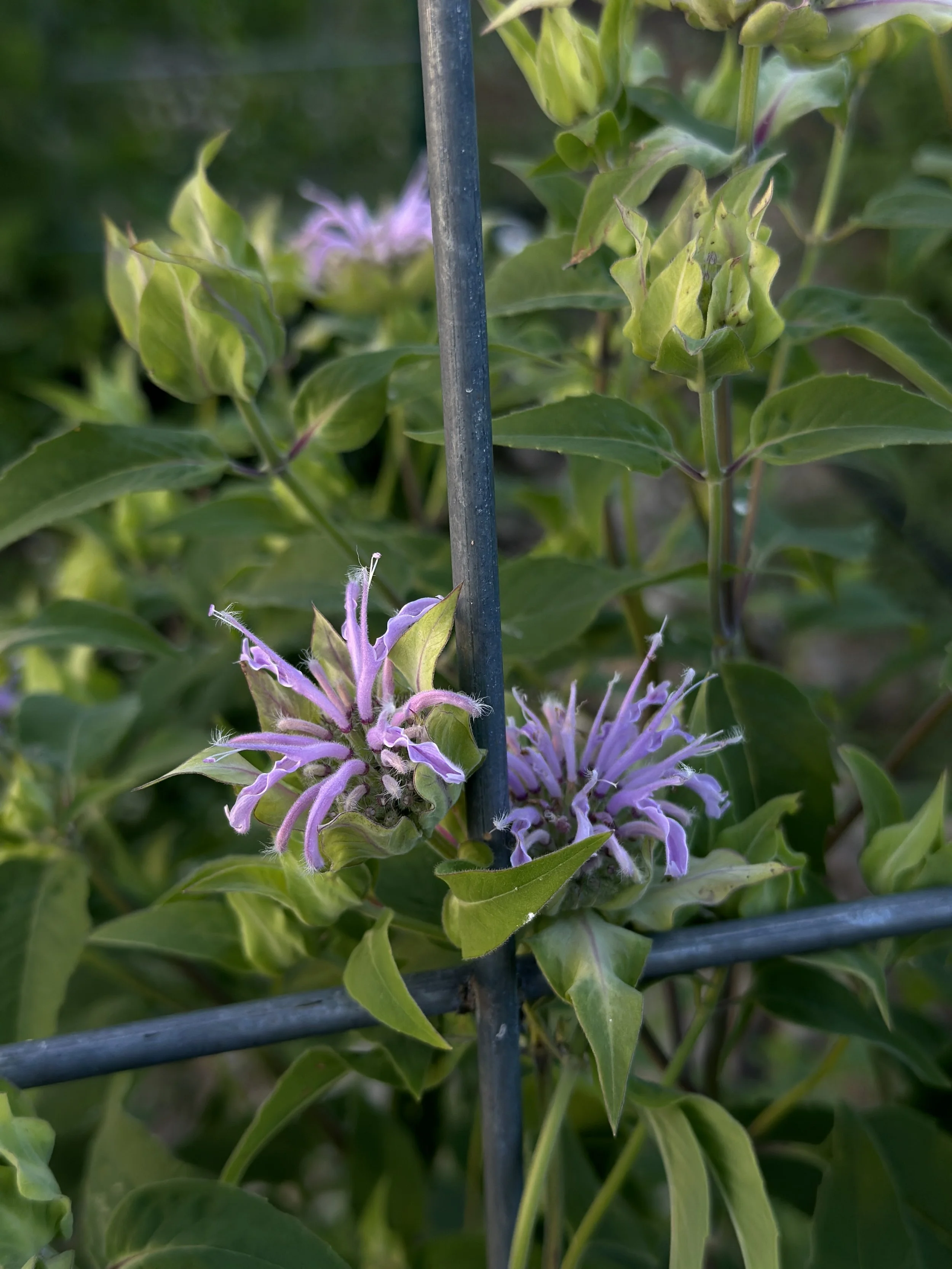
Let’s talk about the lovely bee balm - the plant pretty much EVERYONE should have in their garden, flowerbeds, or dare I say - in place of your lawn??

Monarda, wild bergamot, or Sweet Leaf: a prairie flower, native to most of the mid and eastern US as well as the South, this firework of a flower is not only beautiful, it’s a pollinator magnet, and a pretty powerful plant with a long history of uses in herbalism.

I’ve never seen so many bees and butterflies in my garden. Even this year with the disappearance of the bees (can we talk about that??) the plant still somehow managed to draw them in. I’ve gotten hummingbird moths, butterflies, the list goes on. This plant is such an easy one to incorporate anywhere into your yard, and it’s prime food for our little winged friends.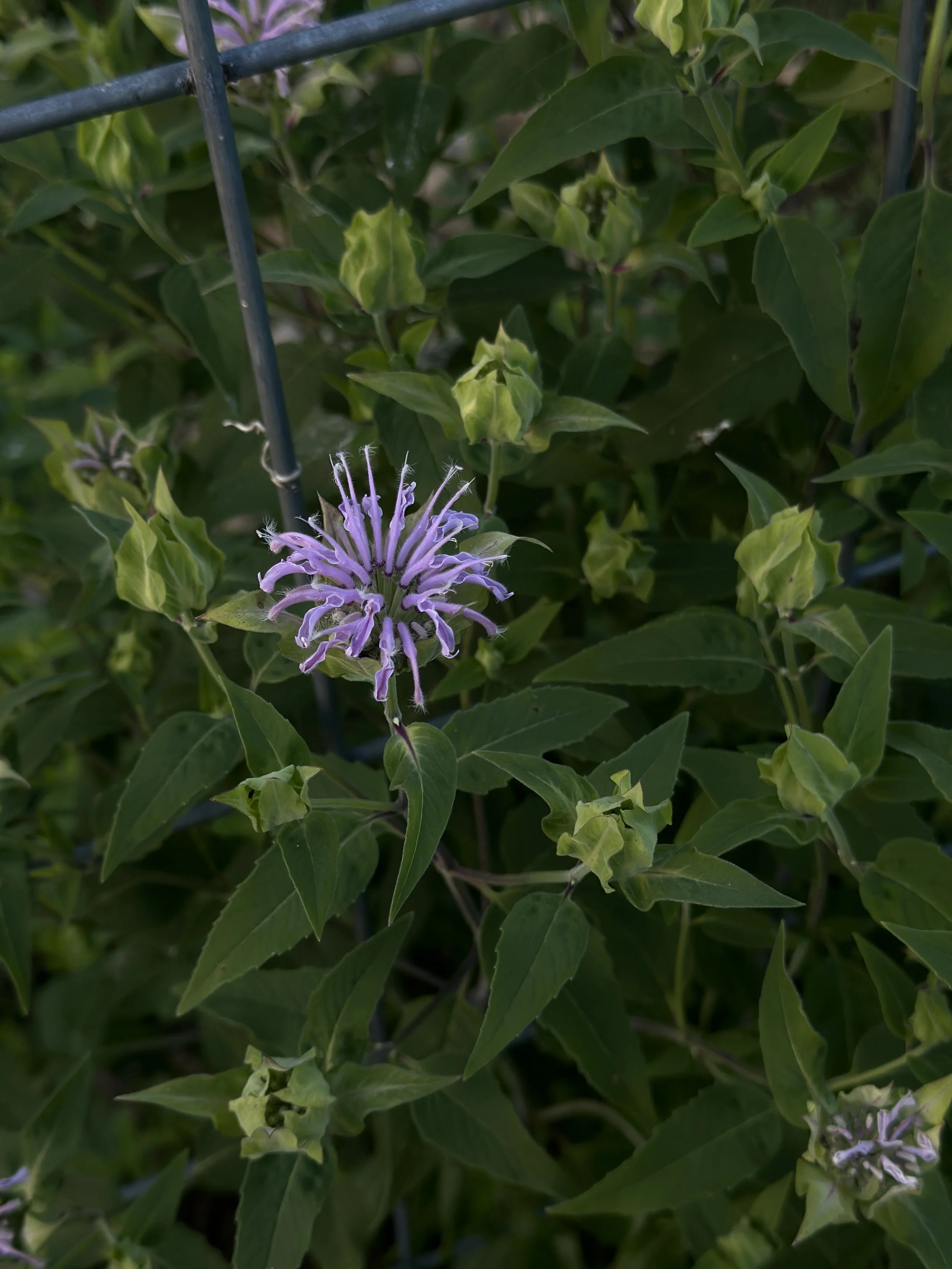
Monarda fistulosa
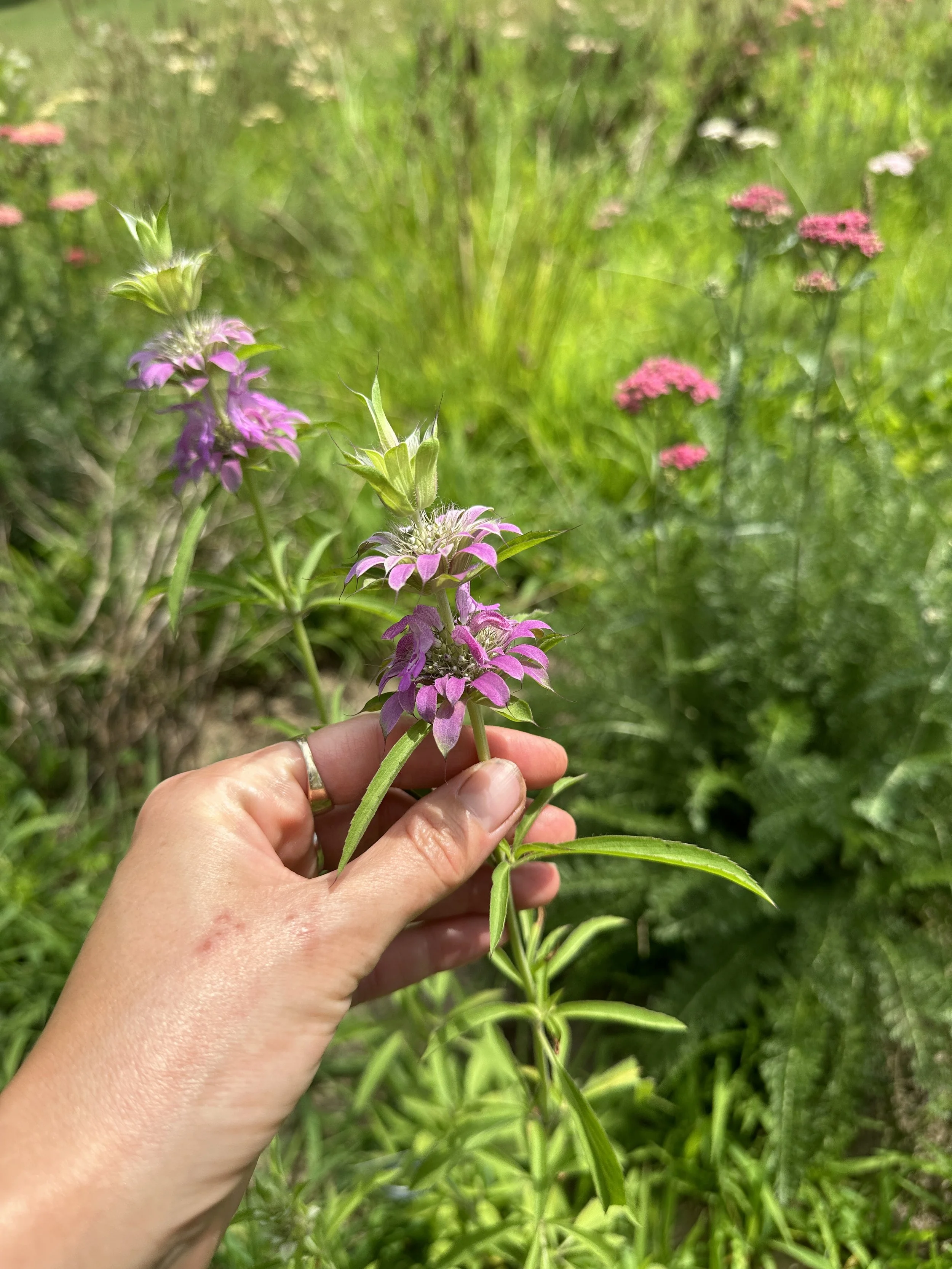
Monarda citriodora (sorry for the parsnip rash on my hand)
There are different varieties, native to different areas in the US. Monarda fistulosa (above left) is native to many parts of North America - the East Coast, midwest, and mountain regions (pretty much everywhere except the West Coast, Texas, and Florida - with some small exceptions). It's a perennial native that explodes here in early summer, it's blooms lasting for a month or two in shades of lavender, pink, and red. Monarda citriodora is a biennial native to more of the Southern regions of the US. It acts as an annual in colder climates, but self sows easily - something to take note of if you intend on putting it in a Northern garden. Monarda citriodora, or lemon bee balm (not be confused with lemonbalm) has flowered for me almost the entire season. It's got three flowers stacked at the top of it's stem, and the blooms seem to hold much longer.

They both enjoy sun to partial shade, and prefer a drier to moderately moist soil. No wet feet here. I have found them to be not the pickiest plants, but they can succumb to powdery mildew with too much moisture.
It’s also got such a rich history in traditional herbalism. Matt Wood, one of my favorite herbalists, quotes Tis Mal, calling it “The remedy to draw out fire” - Sweet Leaf was historically used to treat burns, fevers, and to draw out poisons and toxins (among many other more specific uses). I even chewed it up and put it on my bee sting last summer, and it tremendously helped the accompanying itch and burn. A member of the mint family, it’s rumored to calm the stomach and the nerves.
Its flavor to me is a mix of oregano and thyme, not what I had originally expected. I remember my first cup of bee balm tea - undrinkable. I prefer to use it in smaller additions to more flavorful teas - like with elderflower, mint, and lemon balm when I’m feeling under the weather.
Pretty much anti-everything - I use to help soothe a sore throat and fight a cold, rebalance my gut flora when I need a gentle reboot, and help with nausea or an upset tummy.
A flower that will dazzle you midsummer with dancing bees and butterflies and explosions of red and purple? An herb at hand for a cold or flu or sunburn or bloated belly? Sounds like a no-brainer to me.
(Also I’m just a girl who likes to play with herbs - you should always consult a doctor or licensed medical professional for any health issue or before taking any herb)The